
Female koel near a pond at the Proshikha Training Center near Manikganj, Bangladesh.
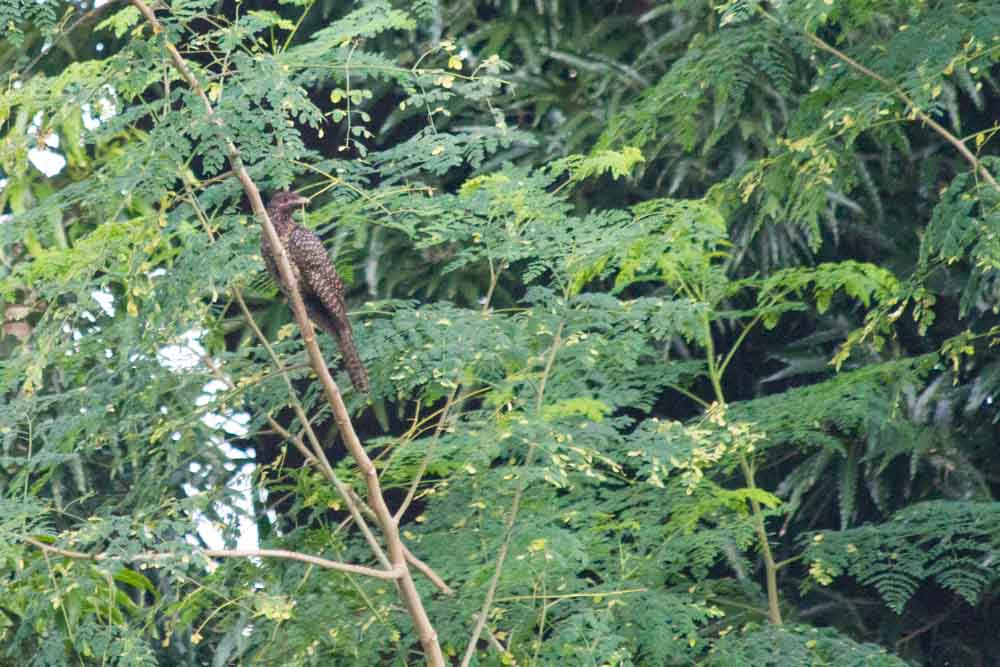
Alert!
Female koel near a pond at the Proshikha Training Center near Manikganj, Bangladesh.
Alert!
Double Decker
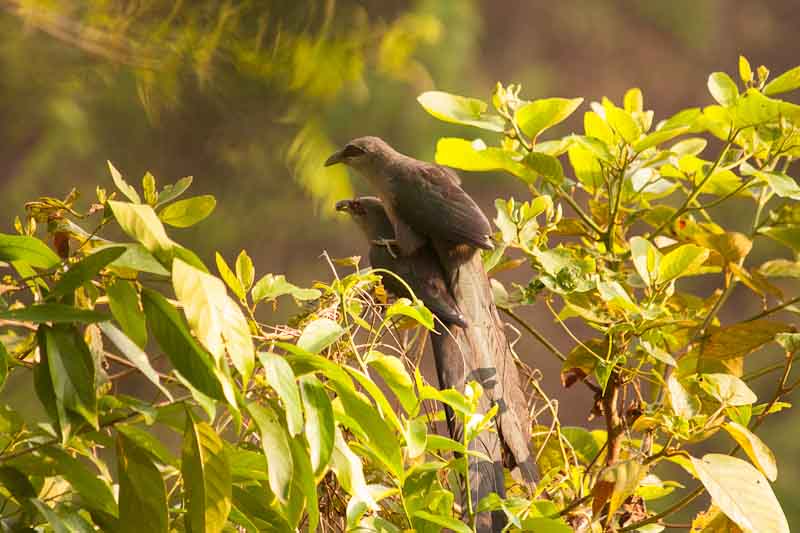
Playing in the bushes!
SUNRISE AS SEEN FROM MEMORIAL CHRISTIAN HOSPITAL COMPOUND IN MALUMGHAT.
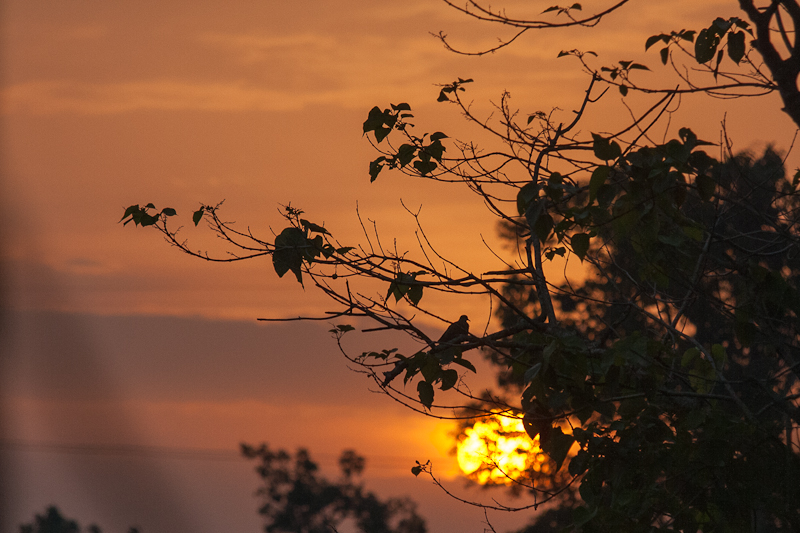
SPOTTED DOVE CATCHING THE EARLY MORNING SUN!
I FINALLY WAS ABLE TO IDENTIFY THE BIRD WHOSE CALL I HAD HEARD EVERY TIME VISITING AT THE TEA RESORT NEAR SRI MONGOL.
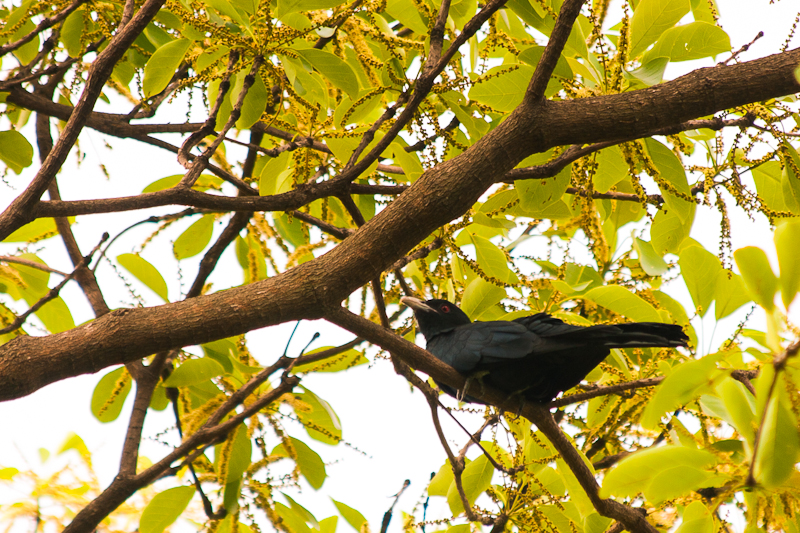
ASIAN KOEL
THIS MYNA BIRD WAS EASY TO CAPTURE WITH MY CANON 70-300 LENS.

WHAT'S UP?
THIS PHOTO WAS TAKEN AT THE TEA RESORT NEAR SRI MONGOL, BANGLADESH.
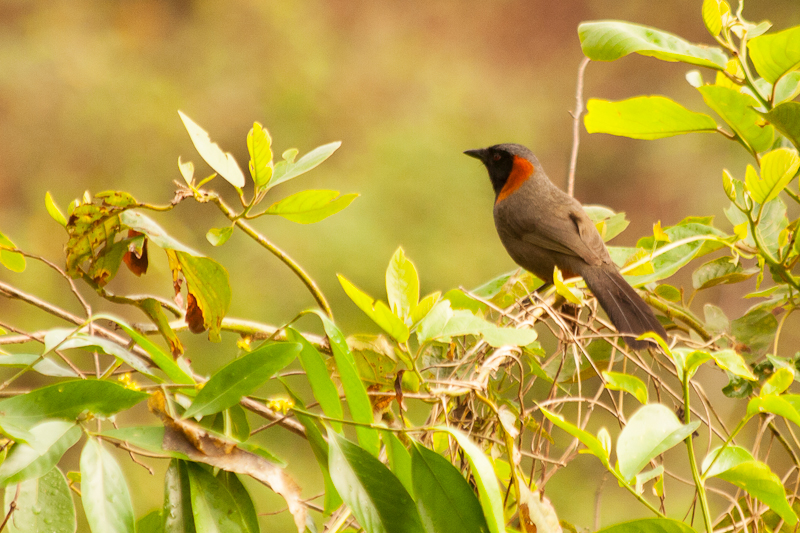
Rufous-Necked Laughing Thrush!
HAPPY EASTER!
I PHOTOGRAPHED THIS TIA PAKI (Bangla name) at Block D, Lalmatia, Dhaka! Different times this bird showed up and I was without my 70-300 Canon IS lens. I used auto focus and when looking at the photos, I wondered if I would have gotten a sharper image with manual focus! So it goes. I saw an ad which showed the price of this bird at 5,00o taka (62.50 USD).
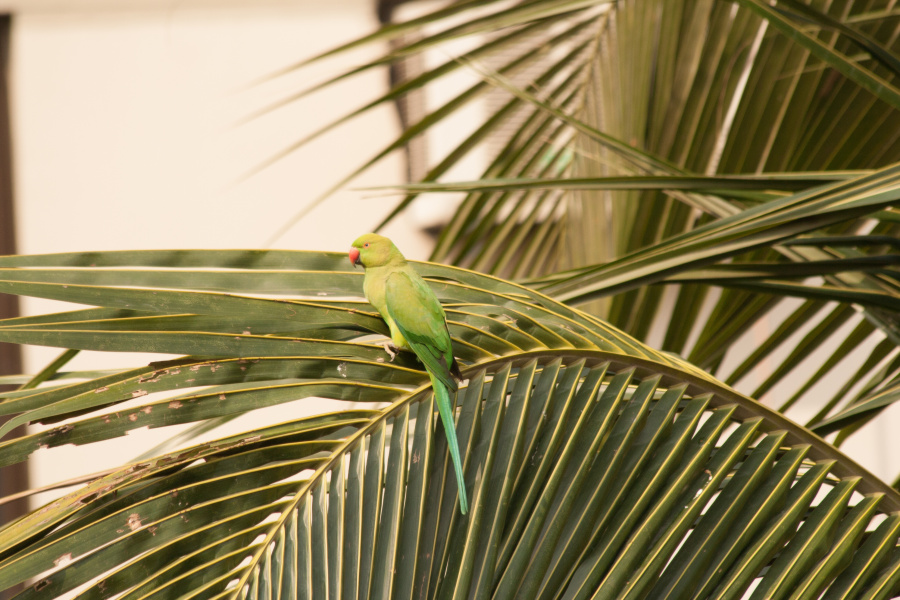
ROSE-RINGED PARAKEET-TIA PAKI-Psittaqcula himalayana
COMING HOME TO A “HONEY DEW” LIST! I knew Alice, my wife said she had a list for me when I arrived after being gone three weeks. I thought it was going to be a long To Do list. She surprised me with this list, which I thought was a very special homecoming gift.
What I missed!
Marland
Your Love
Your Smile
All your Bengali Relationships
Your Shopping
Running Errands
Helping Me
Walking With Me
Encouraging Me
Just Being
Zest for New Experiences!!!
A big thanks to my wife for this special list!!
The Sarus Crane (Grus antigone) is a large non-migratory crane found in parts of the Indian Subcontinent, Southeast Asia and Australia. The tallest of the flying birds, standing at a height of up to 1.8 m (5.9 ft),[3] they are conspicuous and iconic[4] species of open wetlands. The Sarus Crane is easily distinguished from other cranes in the region by the overall grey colour and the contrasting red head and upper neck. They forage on marshes and shallowwetlands for roots, tubers, insects, crustaceans and small vertebrate prey. Like other cranes, they form long-lasting pair-bonds and maintain territories within which they perform territorial and courtship displays that include loud trumpeting, leaps and dance-like movements. In India they are considered symbols of marital fidelity, believed to mate for life and pine the loss of their mates even to the point of starving to death. The main breeding season is during the rainy season, when the pair builds an enormous nest “island”, a circular platform of reeds and grasses nearly two metres in diameter and high enough to stay above the shallow water surrounding it. Sarus Crane numbers have declined greatly in the last century and it has been estimated that the current population is a tenth or less (perhaps 2.5%) of the numbers that existed in the 1850s. The stronghold of the species is India, where it is traditionally revered and lives in agricultural lands in close proximity to humans. Elsewhere, the species has been extirpated in many parts of its former range. From Wikipedia
I was able to get this photo in Northwestern Cambodia last week. I took it with a Canon XTI (400D) camera, CAnon 70-300 mm lens with a Tamron 2x converter. This is as close as I could get. They seemed to be maybe 400 yards away. I suspect the photo would have been sharper had I used a tripod, and a Canon 2x converter.
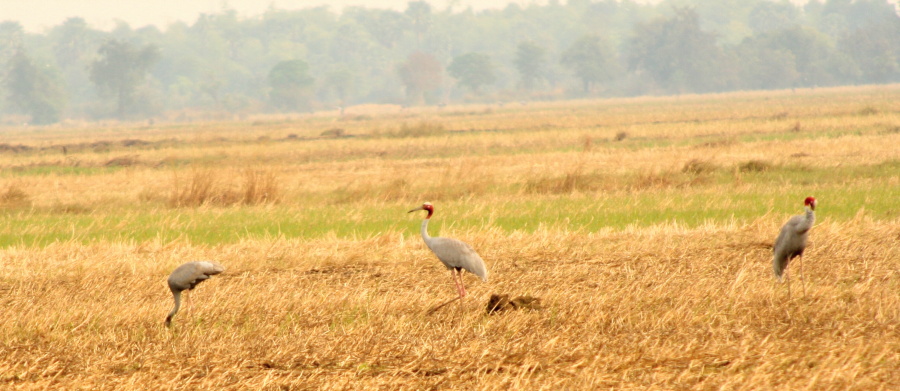
These Sarus Crane were in a rice field Northwest of Siem Reap.
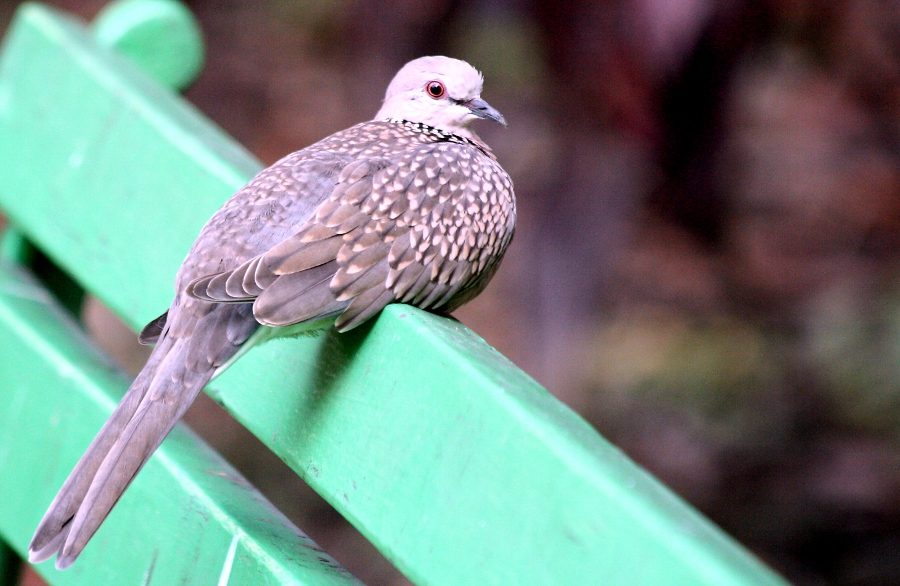
SPOTTED DOVE (Streptopelia chinensis) seen on bench at guest house in Kolkata.
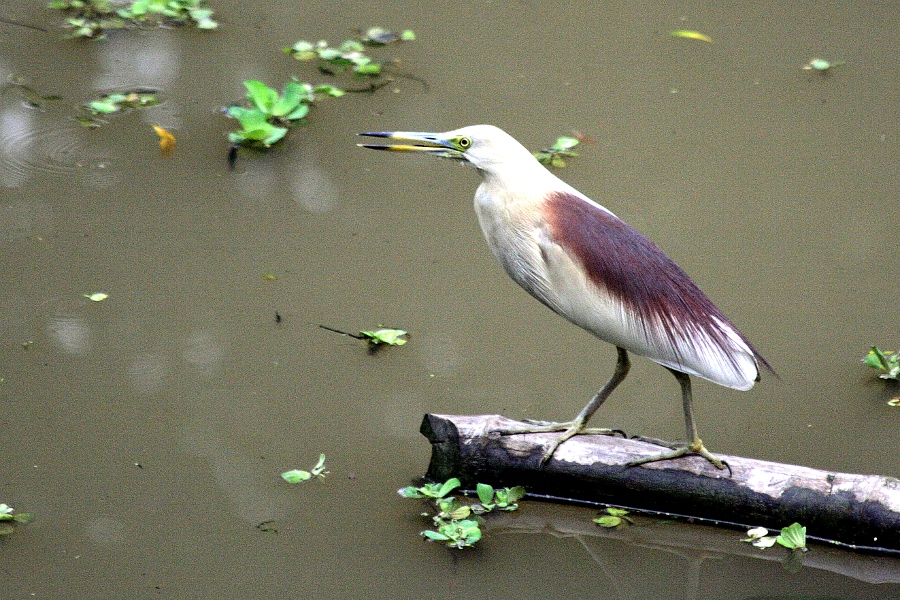
A GRAY’S POND HERON (BAK) at a pond in the Munshiganj district.
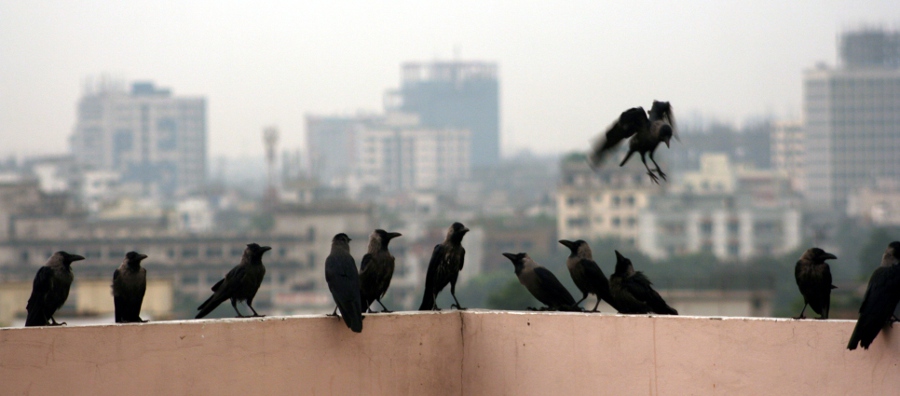
HOUSE CROW (Kak) COMING in for a landing to join the others. This scene is on the rooftop of our 9 story building. Trivia: Later today it will be 10/10/10 10:10!

 The Camerist's Collection